
Guide
Replace, reface or renovate: which is right for an original kitchen?
Reface if the cabinets are sound and you only want a new look. Replace if the cabinets are worn, the layout no longer works or you want everything new: the whole kitchen is swapped in the same space. Renovate when you are changing the room itself, such as moving walls or plumbing. Most original 1970s to 90s kitchens suit a replacement.
Refacing
Refacing keeps the existing cabinet boxes and replaces the doors, drawer fronts and often the benchtop. It suits kitchens where the carcasses are solid and the layout already works. It does not fix sagging shelves, water-damaged bases, poor storage or an awkward layout.
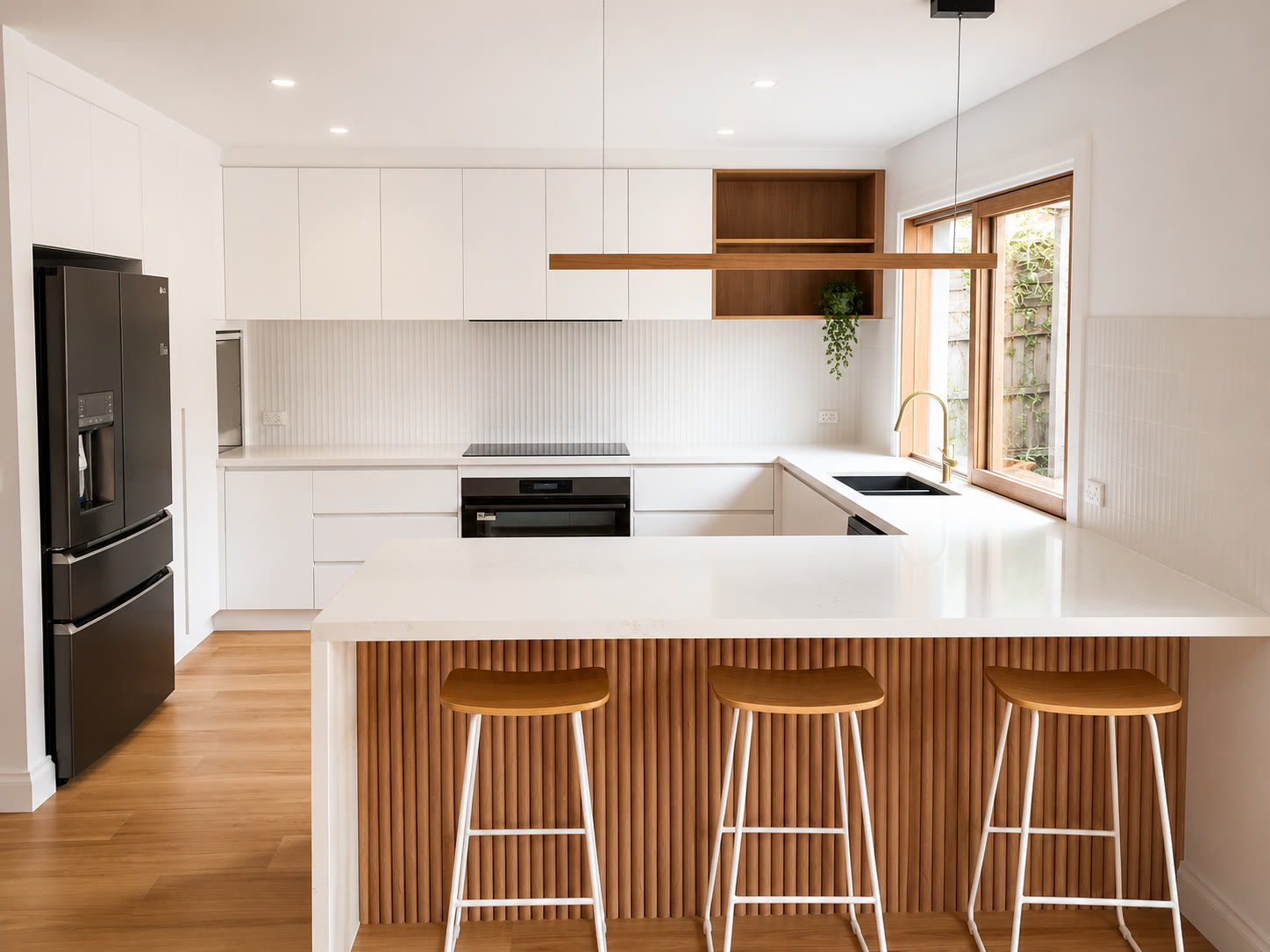
Replacement
A replacement removes the whole kitchen and installs new cabinetry, benchtops and splashback in the same space. You can improve the layout, storage and appliances without the cost and disruption of building work. This is what we do: every kitchen is custom-made in our Melbourne factory and most are installed in as little as 7 days.
Renovation
A renovation changes the room as well as the kitchen: removing walls, opening up to living areas, moving windows or relocating plumbing. It usually involves more trades, permits and time.
Signs an original kitchen needs replacing, not refacing
- Swollen or water-damaged cabinet bases, especially under the sink
- Laminate benchtops that are chipped, lifting or stained
- Not enough storage, or corners and cupboards you cannot use
- A layout that no longer suits how you cook and entertain
- Old appliances you want to integrate properly
Common questions
Usually, because the cabinet boxes stay. It only makes sense if those boxes are in good condition and the layout works.
Yes, within the same room. Because every kitchen is custom-made, we can improve storage, add an island or rework the space without building work.
Send us a few details or photos and we will give you an honest recommendation with your free quote.
Start Your Quote
Get an honest recommendation for your kitchen.
Tell us about your kitchen and we will send a free, itemised quote, usually the same day. No obligation.